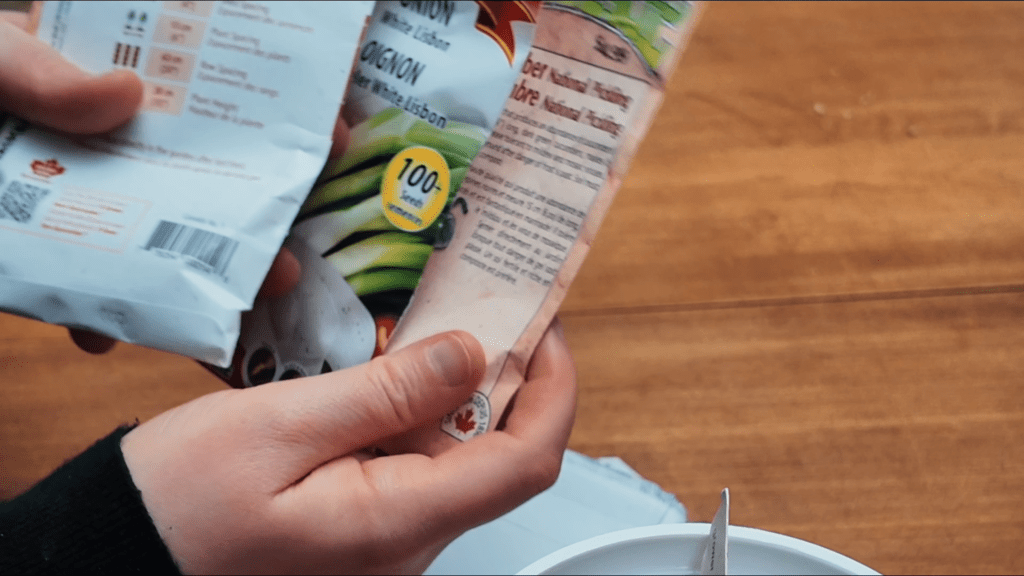
Adjusting My Timing for Spring Planting
It is the time of year where you anxiously and frequently check for any signs of green in the yard. Yet, the weather does not want to cooperate. Spring battles to emerge fully as winter grapples with last efforts to cover everything with snow once again.
I wanted to start cool season crops earlier this year as an experiment to see how early I could push planting in our cold Zone 3 climate and in an attempt to maximize my harvest. But, alas, this seems to be pushed back another week with the upcoming dump of snow expected.
At this point, I’m hoping by the beginning of May that my yard won’t be so muddy from all the snow melt that I can start planting the cool season crops. The wet and muddy soil isn’t ideal for planting or seed germination.
Using the Square Foot Gardening Method
Last year, I tried the square foot gardening method for the first time, but I took a more conservative approach. While things did grow, I knew my garden had a lot more potential. I still wasn’t using the garden beds to their capacity.
So this year, I want to be more intentional about how I plant. I’m aiming for fuller garden beds, which should also help reduce weeds since there’s less open space for them to take over.
So this year is a bit of a test but it also means I get to do more of the fun part, which is planting. With only three raised garden beds and a handful of pots, that part tends to go pretty quickly.
I’ve marked the squares in my garden beds using rocks. Some twine and some sticks would also work good for this. While this is unnecessary, I can easily match what’s in the garden to my layout plan. This also allows me to easily determine how many plants can be grown in each square foot.
Planning My Garden Layout: Spreadsheet Method
Hannah prefers to map out her garden plan in a notebook. The accountant in me loves a good spreadsheet.
To begin my planning for the garden season ahead, I’ve copied over my garden bed layout from last year to a new tab. I usually highlight everything in yellow that needs to change. That way I can keep crop rotation in mind and adjust based on what worked and what didn’t without switching back and forth between tabs repetitiously.
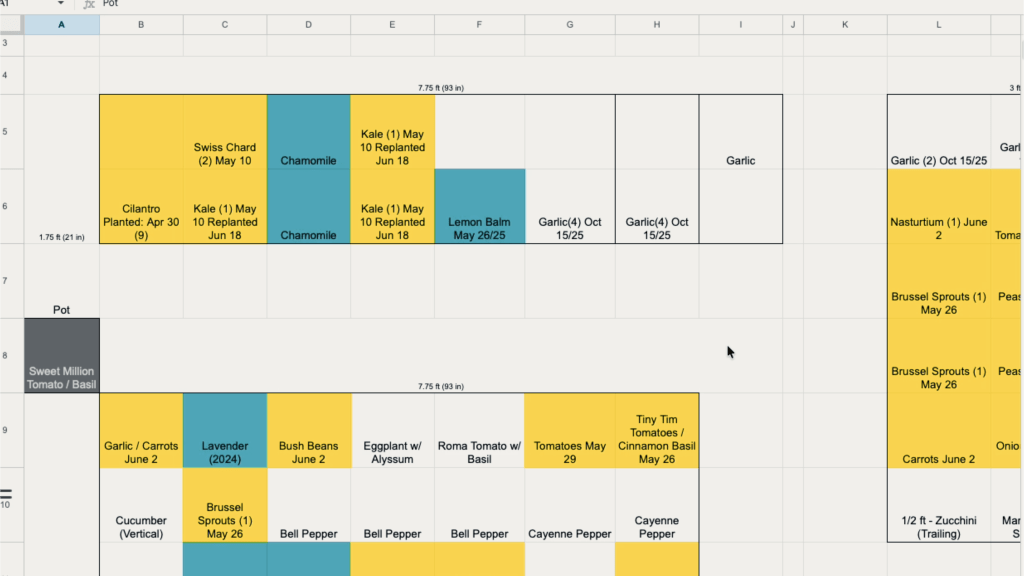
Each square on the garden bed represents one square foot.
The teal sections are perennials that I’m expecting to come back. Or is hoping the right word?
When planning the layout, I started by placing the larger plants first. I focus on having the larger plants in the centre of the garden beds, in pots growing vertically or spilling over the edge of the garden beds for plants that trail.
There’s a fence on the left side here, which I’m hoping to have a cattle panel trellis installed here this year. That way the cucumbers can grow vertically instead of taking up ground space. This also allows the air to flow through the leaves minimizing the risk of diseases such as powdery mildew.
The squash and zucchini at the edges of the garden bed have space to sprawl over the outside of the bed to prevent crowding.
Eggplant is new for me this year, and while I’ve grown squash before on the farm, this will be my first time growing it in my city garden beds. I’m also trying a couple new cucumber varieties: cucamelon and the space saving patio snacker cucumber.
The garlic I planted last fall right before the snow so expecting to see signs of growth soon.
Layering the Garden Bed
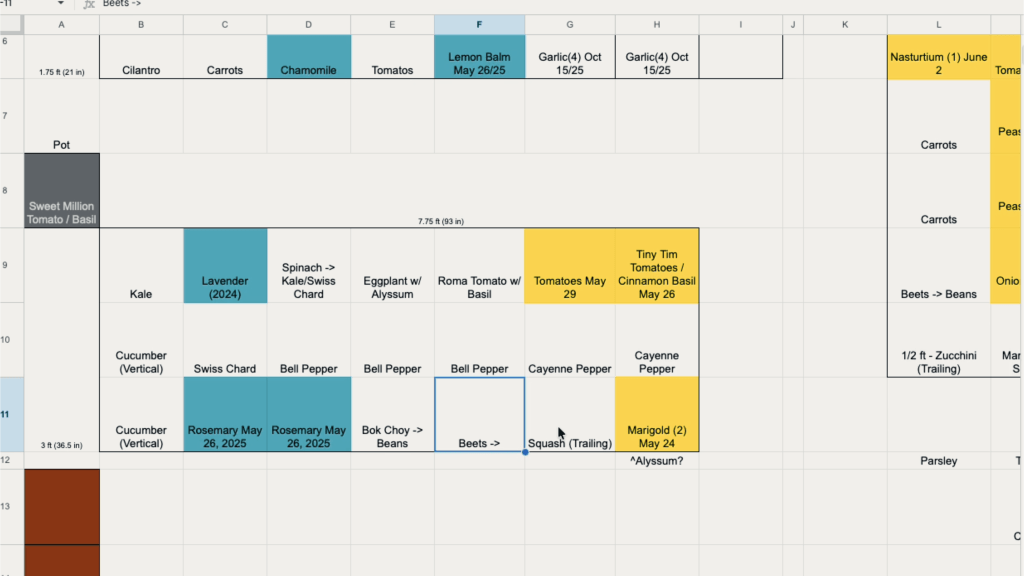
Once I have the larger plants plotted on my garden map, I start looking at the medium plants such as the root and leaf crops. I place these crops as the middle layer of the garden bed.
Once the main crops are placed, I fill in the edges and gaps with herbs and flowers. Plants like basil, cilantro, and companion flowers such as marigold or alyssum can help support the garden by attracting beneficial insects, improving biodiversity, and in some cases helping deter pests.
This layered approach helps maximize space while also creating a more balanced and productive garden.
What I’m Still Figuring Out This Season
There’s still a lot I’m figuring out with timing especially when it comes to what can be planted early and how to make the most of each part of the season.
I’m also paying closer attention to how different areas of the garden perform, especially one bed that struggled quite a bit last year.
I’ll be sharing more as the season unfolds and as I start to see what actually works.
Check out our full garden planning YouTube video here.


 Grace Between the Fields
Leave a reply to @dailyrmemme Cancel reply